The Role of Floating Islands in Restoring Aquatic Ecosystems and Biodiversity
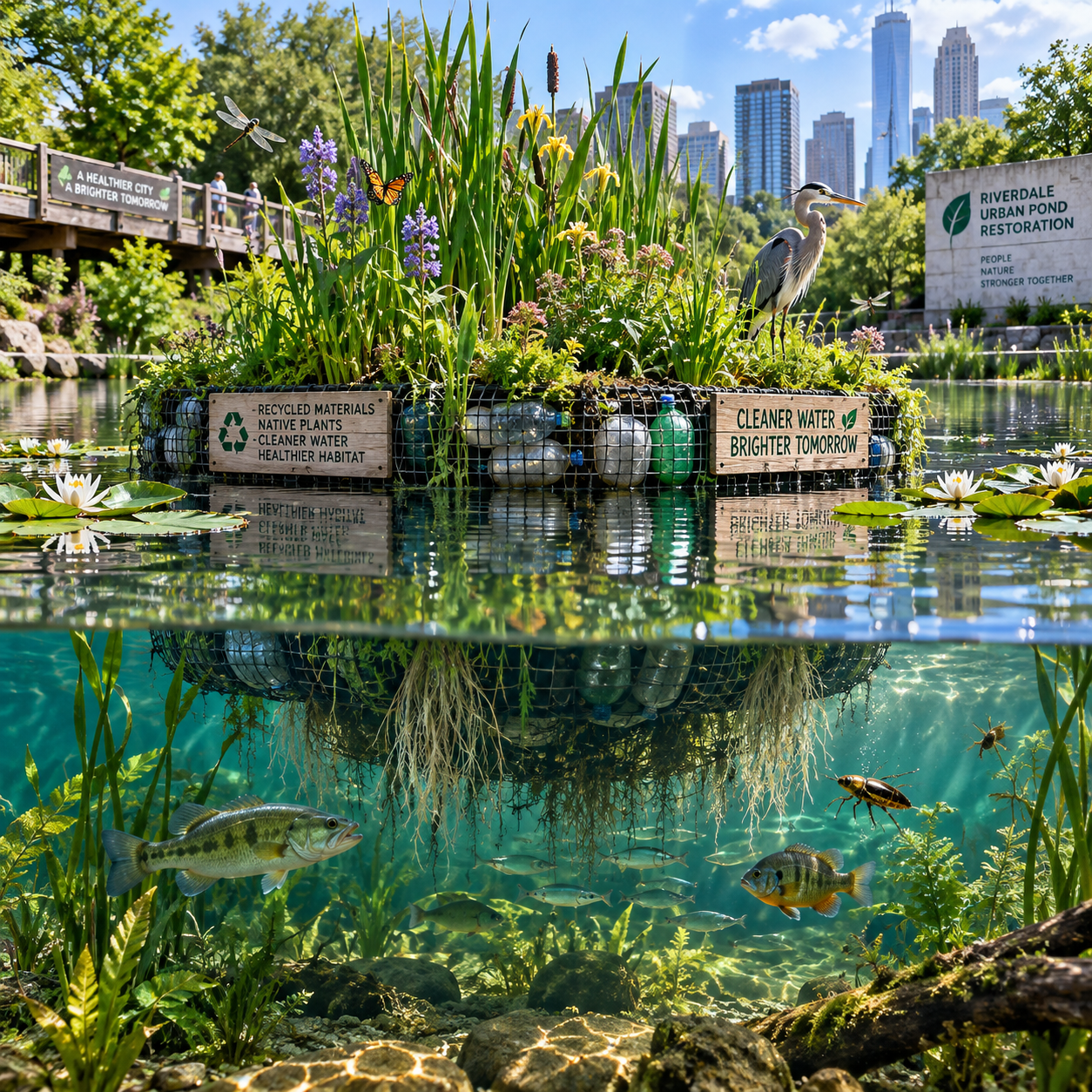
Floating islands made from waste can turn underused materials into living platforms for aquatic restoration. When designed responsibly, these structures support plant growth above the water while their roots create habitat and biological filtration below the surface.
They are increasingly used as floating treatment wetlands, habitat features, and practical examples of circular design. Their effects depend on plant selection, local ecology, water chemistry, anchoring, and maintenance, so they should complement rather than replace conventional wastewater treatment or broader habitat restoration.
What Are Floating Islands Made from Waste?
Floating islands made from waste are buoyant platforms that use repurposed materials to support plants and create functioning aquatic habitat. Their structure usually combines a floating frame, a planting medium or basket system, vegetation, and an anchoring method.
Designers may reuse materials such as reclaimed plastic containers, recycled high-density polyethylene, discarded ropes, recovered foam enclosed in protective shells, and salvaged timber that is proven safe for aquatic use. Some systems also use recycled geotextiles, wire mesh, or repurposed modular components. The material must remain buoyant, stable, and non-toxic as it ages.
Above the surface, native aquatic plants capture sunlight and develop stems, leaves, and flowers. Below it, their roots form a dense three-dimensional zone where microorganisms colonize surfaces and suspended particles can settle. This root zone is the ecological engine of a floating island.
A successful platform follows a simple principle: reuse materials without transferring pollution into the water. Painted wood containing old preservatives, untreated scrap metal, loose polystyrene, and plastics that crumble under ultraviolet light can create more environmental harm than benefit.
Why Aquatic Ecosystems Need Restoration
Aquatic ecosystems need restoration when pollution, habitat loss, altered water flow, and excessive nutrients reduce their ability to support plants and wildlife. Floating islands address only part of this problem, but they can add habitat and biological function where shorelines or sediments have been heavily disturbed.
Urban ponds, reservoirs, canals, stormwater basins, and former industrial water bodies often have simplified edges and limited aquatic vegetation. Runoff may carry nitrogen, phosphorus, sediment, hydrocarbons, and other contaminants. Excess nutrients can encourage algal growth, reduce water clarity, and contribute to oxygen stress as organic matter decomposes.
Habitat loss creates a second pressure. Removing emergent vegetation eliminates shelter for juvenile fish, egg-laying surfaces for insects, and feeding areas for birds and amphibians. A hard concrete edge may be easy to maintain, yet it offers far less ecological complexity than a mosaic of stems, roots, shallow water, and sheltered spaces.
Restoration should begin with diagnosis. A floating island will not solve a continuing sewage discharge, toxic contamination, or severe sediment problem. It works best as one element in a wider plan that controls pollution at its source and reconnects the water body with suitable terrestrial and wetland habitats.
How Floating Islands Improve Water Quality
Floating islands improve water quality mainly through plant nutrient uptake, microbial processing, root-zone filtration, and reduced habitat for suspended particles. The level of improvement varies with island size, loading, water exchange, plant health, and the pollutants present.
Plants absorb dissolved nutrients such as nitrogen and phosphorus as they grow. Harvesting above-water biomass can remove a portion of those nutrients from the system, although unharvested dead leaves eventually return organic matter to the water. Plant roots also slow local water movement, allowing some sediment and particles to settle.
Microorganisms living on roots and structural surfaces perform much of the less visible work. Bacteria can transform nitrogen compounds through processes such as nitrification and denitrification, while microbial communities break down some biodegradable organic pollutants. These reactions need suitable oxygen, temperature, carbon sources, and contact time.
Root surfaces may also bind or trap suspended material. Dense vegetation can shade portions of the water, potentially reducing light available to algae. That effect is site-specific, however, and a floating island should never be presented as a guaranteed cure for harmful algal blooms.
Monitoring should compare conditions before and after installation. Useful measures include turbidity, water clarity, dissolved oxygen, temperature, pH, electrical conductivity, nitrate, ammonium, and phosphate. The U.S. Environmental Protection Agency’s wetlands resources provide useful background on wetland functions and restoration considerations.
Creating Habitat for Aquatic Biodiversity
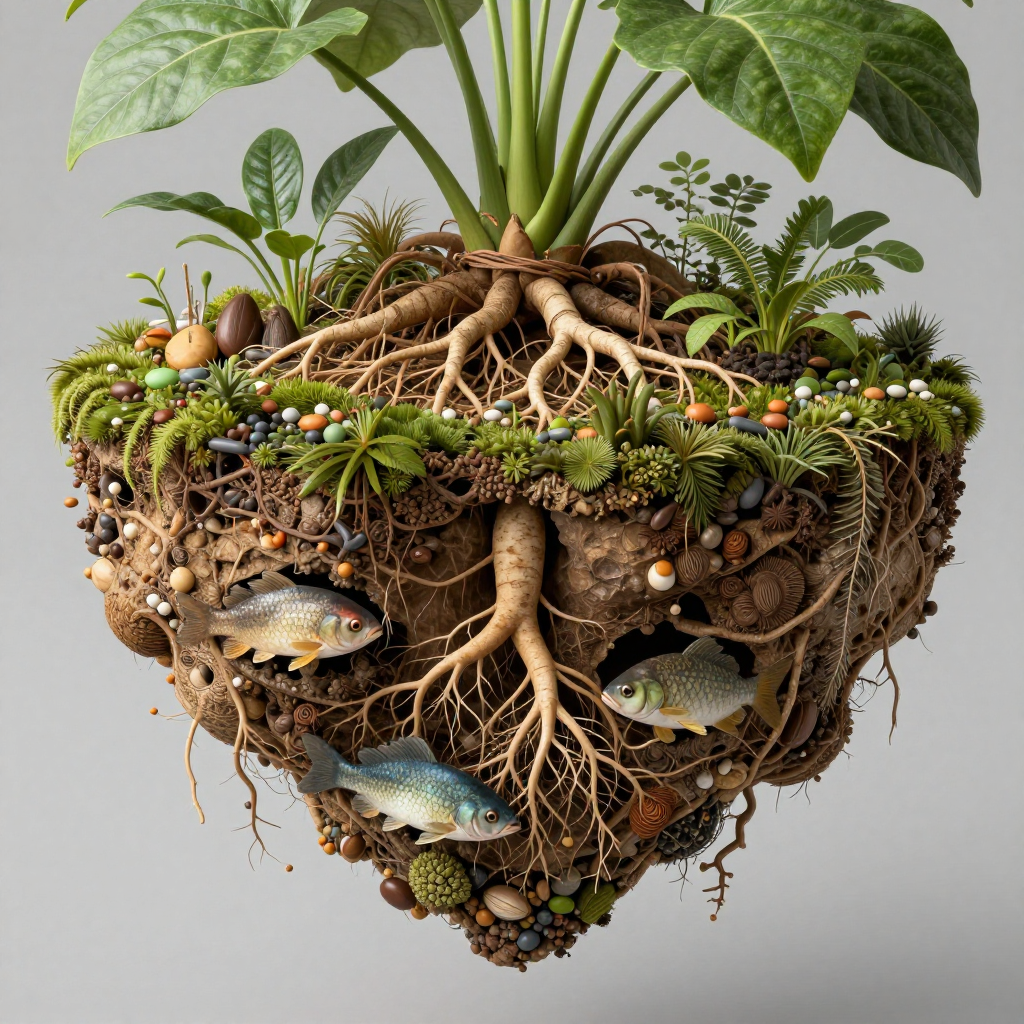
Floating islands can increase aquatic biodiversity by adding refuge, feeding areas, breeding surfaces, and vertical structure to open or degraded water. Their value comes from habitat complexity rather than from the platform alone.
Fish may use submerged roots as cover from predators and as nursery habitat for young individuals. Aquatic invertebrates, including insect larvae, snails, crustaceans, and worms, colonize roots and biofilms, creating food for fish, amphibians, and birds. Microorganisms form the base of these food webs and help process organic matter.
Emergent stems can provide attachment points for dragonflies and damselflies, while flowers support pollinating insects at the water’s edge. Some amphibians may use sheltered vegetation for resting or feeding. Birds can use islands as temporary perches, although excessive nesting pressure may damage plants or overload lightweight structures.
Different organisms need different conditions. A platform with fine, dense roots offers a different refuge from one with broad, open stems. Varying plant height, root density, shaded pockets, and exposed edges creates a more useful habitat mosaic. Anchoring is essential because a drifting island can block culverts, damage infrastructure, or spread unwanted plants.
The Importance of Plant Selection and Design
Plant selection and design determine whether a floating island functions as habitat restoration or merely as decoration. Choose locally appropriate native aquatic plants, avoid invasive species, and match the design to water depth, wave exposure, nutrient levels, climate, and wildlife goals.
Choosing suitable plants
Good candidates are usually native emergent or wetland plants with strong root systems and tolerance for periodic inundation. Examples may include locally native sedges, rushes, bulrushes, pickerelweed, arrowhead, or other species recommended by regional botanical authorities. The correct choice depends on geography; a plant considered native in one watershed may be invasive in another.
- Root structure: fine roots increase microbial surface area, while thicker roots may provide stronger fish refuge.
- Growth habit: mixed-height vegetation creates more layers for insects, fish, amphibians, and birds.
- Seasonal behavior: plants should tolerate local winters, droughts, floods, and changing water levels.
- Management needs: species that spread aggressively may require regular thinning and biomass removal.
Matching the platform to the site
Buoyancy must support the frame, planting medium, mature plants, absorbed water, and occasional wildlife load. Designers should allow reserve buoyancy rather than operating the structure close to its maximum capacity. Wave-exposed lakes may require flexible connections and stronger anchoring than sheltered ponds.
Modular islands can be easier to install and repair, while larger continuous rafts may provide more root habitat. The trade-off is straightforward: larger structures offer more ecological area but increase anchoring forces, inspection demands, and the consequences of structural failure.
From Waste Material to Nature-Based Solution
Recycled and upcycled materials connect waste reduction with nature-based restoration when they are durable, traceable, and safe for aquatic life. Reusing a material is beneficial only if it remains stable and does not release toxins or fragments.
Before construction, assess each material for ultraviolet resistance, buoyancy, abrasion, chemical compatibility, and end-of-life recovery. Recycled plastic can be useful because it resists water damage, but it should be mechanically secured and protected from brittle fragmentation. Reclaimed timber may work in some settings if it is untreated, structurally sound, and unlikely to leach preservatives.
A practical screening framework is SAFE: Stability, Aquatic toxicity, Function, and End-of-life. Stability asks whether the material will survive waves and weather. Aquatic toxicity checks coatings, adhesives, metals, and additives. Function considers buoyancy and load capacity. End-of-life planning ensures the island can be dismantled without leaving debris behind.
This approach strengthens several wetland ecosystem services at once: nutrient cycling, habitat provision, shoreline support, educational value, and—in some settings—water-quality improvement. It also prevents the common mistake of treating any discarded object as suitable ecological infrastructure.
Limitations, Maintenance, and Measuring Success
Floating islands require regular inspection, plant management, and ecological monitoring because their performance changes over time. They are valuable tools, but they cannot compensate for uncontrolled pollution or replace complete wetland restoration.
Common challenges include invasive plant spread, structural degradation, overloaded anchors, blocked water movement, animal damage, and overcrowded vegetation. Roots can also become too dense, reducing circulation beneath the platform. Dead biomass may return nutrients to the water if it is not removed at the right time.
Common mistakes to avoid
- Using attractive but invasive plants: People often choose fast-growing species for quick coverage. The consequence can be escape into natural waterways and costly removal. Use locally approved native plants instead.
- Using unsafe waste materials: Scrap materials may contain coatings, oils, heavy metals, or unstable plastics. Screen every component and reject anything with uncertain chemical history.
- Installing without a baseline: Without pre-installation measurements, it is difficult to distinguish real improvement from seasonal change. Record water quality and wildlife observations before deployment.
- Ignoring maintenance access: A platform that cannot be safely reached will not be inspected or harvested consistently. Design for routine checks, repairs, and responsible biomass removal.
Success should be measured through several indicators rather than one dramatic result. Track plant survival, root development, water clarity, nutrient concentrations, dissolved oxygen, structural condition, and evidence of fish and aquatic invertebrate use. Compare results with a nearby control area where possible, and monitor across seasons.
A successful project leaves the water body more resilient without creating a new source of debris or invasive species. The strongest floating islands therefore combine ecological design, safe recycled materials, native vegetation, careful anchoring, and long-term stewardship.
Frequently Asked Questions
How do floating islands help clean polluted water?
Plant roots and associated microorganisms can absorb or transform some nutrients, trap suspended particles, and support biological filtration. Results depend on the pollutant, loading rate, island size, and water movement.
Can floating islands increase aquatic biodiversity?
Yes. They can provide shelter, feeding areas, breeding surfaces, and attachment points for fish, aquatic invertebrates, amphibians, insects, birds, and microorganisms. Benefits are strongest when islands add varied habitat rather than a single dense plant mass.
What waste materials can be used to make floating islands?
Potential materials include recycled plastic, reclaimed ropes, recovered geotextiles, safe salvaged timber, and repurposed structural components. Every material must be durable, non-toxic, secure, and suitable for aquatic exposure.
Which plants are suitable for a floating island?
Locally native, non-invasive emergent and wetland plants are generally the safest choice. Select species with strong roots and tolerance for the site’s climate, water depth, nutrient conditions, and wave exposure.
Do floating islands require regular maintenance?
Yes. Inspect anchors and buoyancy, remove damaged components, control aggressive growth, harvest biomass when appropriate, and monitor water quality and wildlife use. Maintenance frequency depends on the site and design.