Case Studies: Successful Recycled-Material Floating Island Projects Worldwide
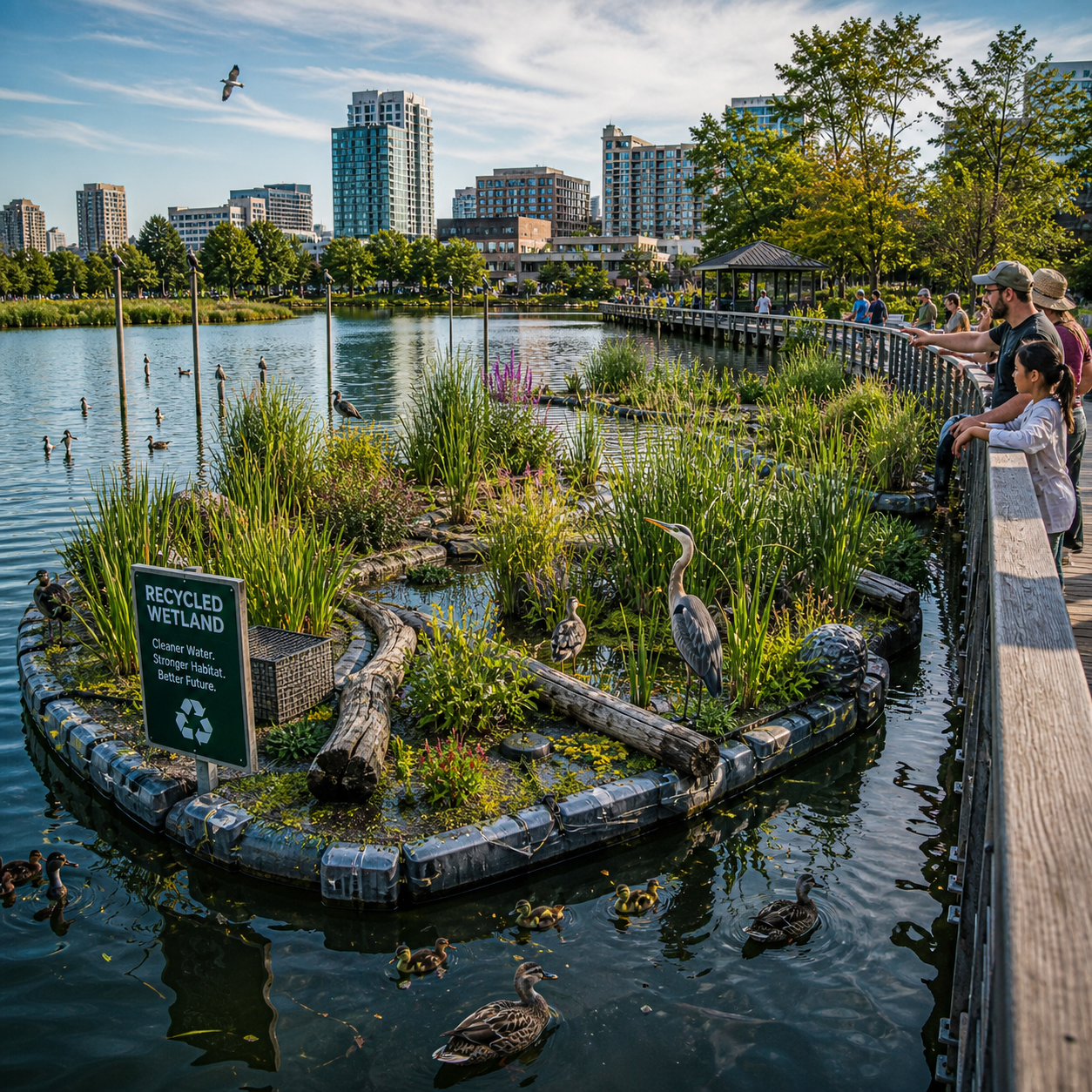
Floating islands made from recycled materials are becoming practical tools for restoring aquatic habitat, improving water quality, and reusing difficult waste streams. Their success depends on more than appearance: the structure must remain buoyant, plants must survive, wildlife must benefit, and the materials must stay safe throughout their service life.
Because projects differ by climate, water body, budget, and regulation, the most useful worldwide examples are best understood as case-study models. They show how artificial floating islands and floating wetlands can turn a waste-to-resource concept into a durable ecological intervention without assuming that every recycled product is automatically sustainable.
What Are Recycled-Material Floating Islands?
Recycled-material floating islands are buoyant platforms that support plants and habitat while incorporating recovered or repurposed materials in their flotation, frame, planting system, or surface structure. They may serve decorative, ecological, educational, or water-treatment purposes.
An artificial floating island normally combines four working layers:
- Buoyancy: sealed recycled plastic containers, reclaimed high-density polyethylene, recycled foam designed for aquatic use, or other certified flotation components.
- Framing: reused plastic lumber, treated timber approved for water contact, recycled metal, or modular connectors that hold the platform together.
- Planting support: coir, recycled geotextiles, mineral media, root mats, or protected baskets that allow roots to reach the water.
- Habitat structure: submerged ropes, textured edges, cavities, and sheltered spaces for insects, fish, amphibians, and birds.
Some islands are primarily landscapes for parks and resorts. Others are floating wetlands designed to intercept nutrients, shade water, and provide aquatic habitat restoration. Water quality improvement can occur when roots and attached microbial communities retain suspended particles or take up nutrients, but performance depends on loading, flow, plant health, and maintenance.
How to Evaluate a Successful Floating Island Project
A successful floating island project performs reliably across seven areas: safe material reuse, stable buoyancy, healthy plants, habitat value, measurable water-related benefits, manageable maintenance, and responsible end-of-life handling.
A useful evaluation framework is the FLOAT test: Fit the site, Load the structure correctly, Observe ecological outcomes, Anchor it safely, and Track the full material life cycle.
- Site fit: Check water depth, wave action, ice, boat traffic, access, water chemistry, flood levels, and permitting requirements.
- Load and stability: Calculate the weight of saturated planting media, mature plants, rainfall, wildlife, and maintenance workers. Include a safety margin because wet systems become heavier over time.
- Plant survival: Measure establishment, seasonal coverage, root development, invasive spread, and replacement rates. Native wetland plants usually offer the strongest ecological fit.
- Habitat value: Look for evidence of shelter, feeding, nesting, spawning, pollinator use, or increased structural complexity rather than simply counting visible birds.
- Water-related outcomes: Test nutrients, turbidity, dissolved oxygen, temperature, or contaminants before and after installation where the project claims water quality improvement.
- Operations: Record inspection frequency, storm damage, vandalism, fouling, plant trimming, and anchoring repairs.
- Environmental safety: Confirm that plastics, coatings, fasteners, and reclaimed components will not fragment, leach toxins, trap wildlife, or create microplastic pollution.
Projects should also report limitations. A small island can create valuable refuge without producing a detectable change in an entire lake. Choosing more recycled content for cost or waste reduction may mean accepting more inspection work unless the material has been tested for long-term aquatic exposure.
Case Study 1—Urban Waterways and Floating Wetlands
In urban waterways, recycled-material floating wetlands provide habitat and planting space where crowded shorelines leave little room for conventional restoration. Their strongest results usually combine ecological design with visible public engagement and careful anchoring.
A typical urban model uses modular frames made from recycled plastic lumber or reused, sealed flotation units. A recycled geotextile or coir planting mat holds native sedges, rushes, bulrushes, and other emergent wetland plants. The island is positioned near a stormwater outfall, canal edge, or slow-moving basin, where roots can interact with the water column.
The project addresses several urban constraints at once:
- limited land for wetland expansion;
- hard, disconnected shorelines;
- nutrient and sediment inputs from stormwater;
- public demand for visible climate and biodiversity projects.
Maintenance teams inspect flotation and anchors after heavy rain, remove litter, thin overcrowded vegetation, and replace failed plants. Signs or viewing platforms can turn the island into an outdoor classroom, helping residents understand plastic waste, native vegetation, and aquatic habitat restoration.
The limitation is scale. One island rarely cleans an entire urban waterway. Its measurable contribution may be localized, while its social value and habitat function extend farther. The transferable lesson is to place floating wetlands where they solve a defined problem, then monitor both ecological performance and public use.
Case Study 2—Restoring Habitat in Lakes, Ponds, or Reservoirs
In lakes, ponds, and reservoirs, recycled floating islands are most effective when they add missing habitat complexity without obstructing navigation, fish movement, or water management operations.
This case-study model uses a low-profile modular raft with recycled flotation beneath a planted surface. Submerged ropes, mesh, or root curtains extend below the platform, creating refuge for juvenile fish and aquatic invertebrates. Native wetland plants soften wave energy, provide shade, and offer perching or nesting opportunities for selected species.
The design responds to habitat loss caused by fluctuating water levels, cleared shorelines, erosion, or reservoirs with few shallow-water features. Unlike a fixed island, a buoyant platform can remain at the water surface as levels change, although anchor lines must accommodate that movement.
Successful planning begins with a biological question: which habitat is missing, and which species could use it? A platform intended for fish refuge may need submerged complexity, while one intended for pollinators requires flowering native plants and safe access from land.
Potential outcomes include greater shelter, improved edge habitat, and more places for roots and microorganisms to develop. The trade-off is exposure to wind, waves, ice, bird loading, and fluctuating water chemistry. A structure that works in a sheltered pond may fail in a reservoir unless its buoyancy, connectors, and mooring system are upgraded.
Case Study 3—Waste Reduction and Community-Led Island Building
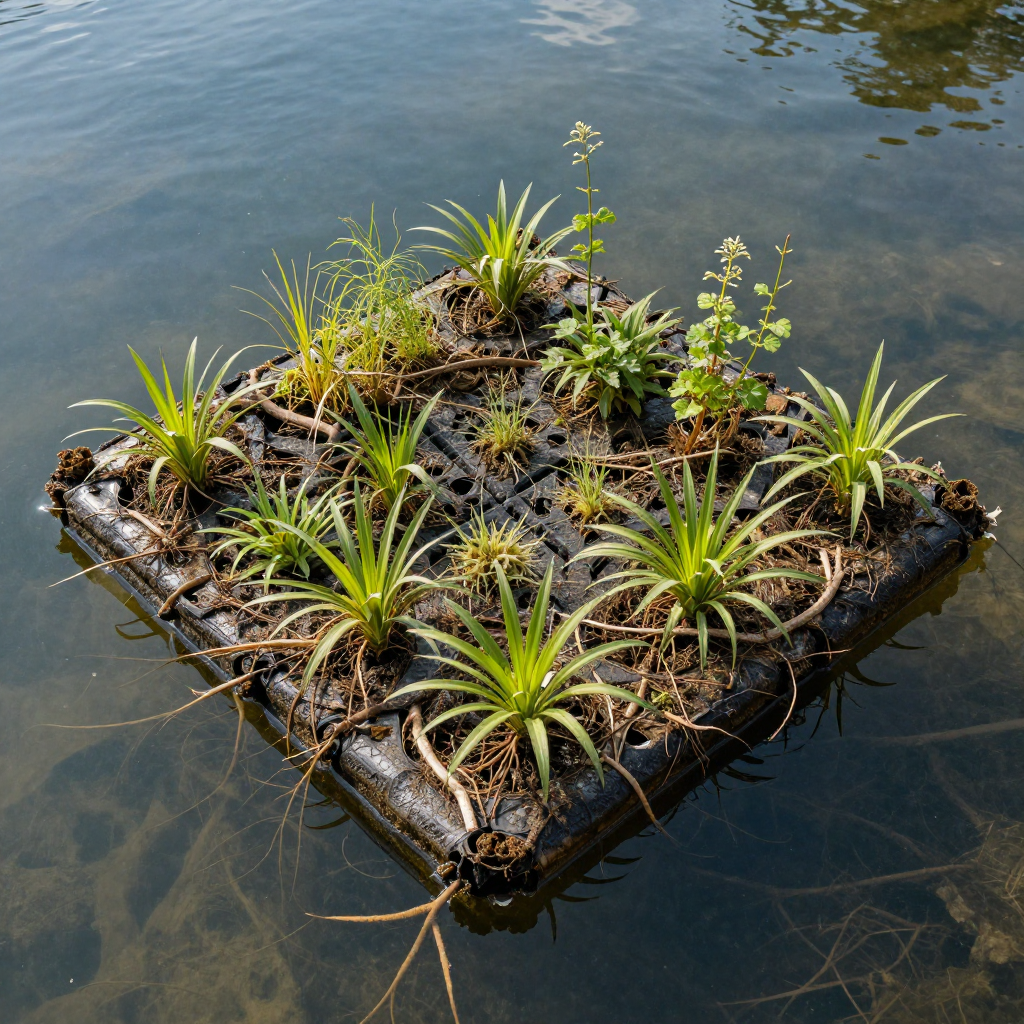
Community-led floating islands work best when local participants reuse safe, available materials, build simple modules, and commit to long-term inspection rather than treating construction as a one-day event.
A community project might repurpose cleaned plastic containers as protected flotation, reclaimed pallets or plastic lumber as a frame, and locally produced coir or natural-fiber mats as planting support. Every component needs screening: containers must be sealed, plastics must be free from chemical residues, timber must resist decay without harmful leaching, and loose items must be secured against storms.
Participatory construction creates several benefits:
- residents learn how buoyancy and modular construction work;
- schools can connect waste reduction with biodiversity monitoring;
- local groups develop ownership of maintenance;
- small modules can be repaired without removing the entire island.
The project should define responsibilities before launch. Who removes litter? Who checks anchors? Who records plant survival? Who pays for replacement materials? Without clear answers, a low-cost island can become abandoned debris.
Community enthusiasm is valuable, but it cannot replace engineering review or ecological screening. The strongest model pairs local labor with advice from a water manager, ecologist, or structural professional. That combination keeps the waste-to-resource design practical and protects the water body from accidental contamination.
Case Study 4—Large-Scale or Modular Floating Island Systems
Large-scale floating island systems succeed by using repeatable modules that can be transported, anchored, expanded, inspected, and replaced without dismantling the whole installation.
A modular system may use recycled polyethylene pontoons, reclaimed plastic framing, standardized planting trays, and interchangeable habitat panels. Modules are assembled on shore, moved by boat or trailer, connected on site, and secured with chains, cables, piles, or weighted anchors selected for local conditions.
Modularity offers practical advantages:
- Phased growth: managers can start with a pilot and expand after monitoring results.
- Targeted repair: damaged flotation or planting trays can be replaced individually.
- Transport efficiency: flat or compact components reduce installation logistics.
- Adaptive design: different modules can support nesting, fish refuge, nutrient interception, or public education.
Large systems also magnify risk. A failed connector can release multiple modules, while a poorly selected anchor can damage the bed, shoreline, or navigation channel. Procurement specifications should require material traceability, UV and fatigue testing, wildlife-safe gaps, and a documented end-of-life plan.
Expansion should follow evidence, not visual appeal. Managers can compare plant survival, maintenance hours, anchor movement, litter accumulation, and water measurements across pilot modules before committing to a larger footprint.
Shared Lessons for Future Floating Islands from Waste
The worldwide case studies point to the same conclusion: responsible floating islands from waste begin with site suitability and life-cycle safety, then use recycled materials to support a clearly defined ecological purpose.
Choose materials for the whole service life
Recycled content matters, but durability and containment matter too. Avoid materials with unknown chemical histories, exposed foams, brittle plastics, lead-based coatings, and components that can shed fragments. Design for disassembly so parts can be repaired, recycled, or disposed of safely.
Match plants to the site
Use native wetland plants suited to local water depth, climate, salinity, seasonal flooding, and wildlife relationships. A dense root mat can improve stability and habitat, yet overly aggressive species may spread beyond the project boundary. Plant diversity should be intentional rather than random.
Engineer buoyancy, anchoring, and wildlife safety
Test buoyancy with saturated materials and realistic loads. Provide redundant connections, flexible anchor lines where water levels fluctuate, and edge details that do not trap turtles, birds, or mammals. Keep navigation lanes and emergency access clear.
Monitor, maintain, and publish results
Record baseline conditions before installation, then track plants, structural movement, litter, wildlife use, and relevant water indicators. Monthly checks may suit a sheltered pilot; storm-prone sites may need inspections after every major weather event.
Before construction, ask five final questions: Is the waste material safe? Is the ecological goal measurable? Can the island be anchored without damage? Who will maintain it for at least five years? What happens when the components reach end of life? Honest answers distinguish a successful recycled-material floating island project from an attractive but temporary object.
Frequently Asked Questions
What materials can be safely reused to build a floating island?
Potential materials include certified recycled plastic lumber, sealed recycled polyethylene flotation, durable reclaimed framing, coir, recycled geotextiles, and corrosion-resistant fasteners. Materials must be clean, traceable, securely contained, and suitable for prolonged contact with water.
How do floating islands improve aquatic habitats or water quality?
Floating wetlands add root habitat, shade, shelter, and surfaces for microorganisms. They may retain sediment or absorb nutrients locally, but results depend on plant growth, water flow, loading, and maintenance. Testing is needed before claiming measurable treatment.
Which plants are suitable for a recycled-material floating wetland?
Native sedges, rushes, bulrushes, wetland grasses, and other locally appropriate emergent plants are common choices. Select species for the site’s climate, water depth, salinity, wildlife value, and invasiveness risk.
How are floating islands anchored and maintained?
Anchoring may use weighted lines, chains, cables, guide piles, or shoreline connections, depending on depth, flow, waves, and water-level change. Maintenance includes checking buoyancy, connectors, anchors, plants, litter, erosion, and wildlife interactions.
What risks should be assessed before installing one?
Assess chemical contamination, plastic fragmentation, storm movement, ice, navigation, invasive plants, wildlife entanglement, water-quality conditions, permitting, public safety, and end-of-life disposal. A small pilot is often safer than immediate full-scale deployment.