From Waste to Wonder: How Ocean Plastics Can Become Floating Habitats
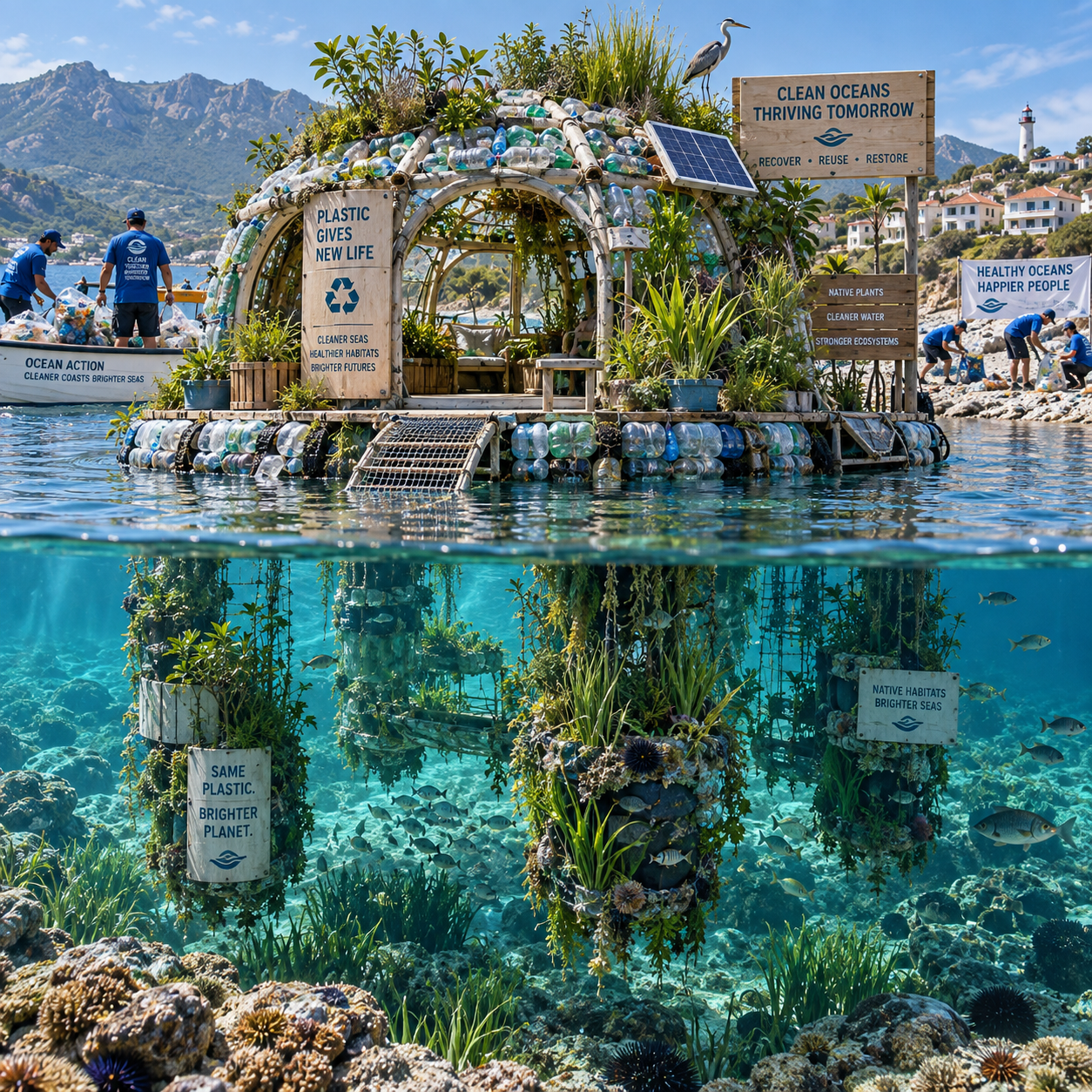
Ocean plastic is often treated as a material with no value once it reaches the sea. In carefully designed projects, some recovered plastics can instead become components of floating islands: buoyant platforms that hold plants and create sheltered spaces for aquatic life. The idea is promising, but its success depends on material safety, sound engineering, and regular care.
A floating habitat is not a cleanup shortcut or a substitute for preventing plastic pollution. It is a specific reuse strategy, best considered when recovered materials can be traced, prepared, and incorporated into a structure without creating new risks for wildlife or water quality.
The plastic problem—and a possible new use
Ocean plastic is persistent waste that can harm wildlife, break into smaller pieces, and accumulate in coastal and marine environments. Suitable, recovered plastic may have a second use in a floating habitat, but only after careful sorting and evaluation.
Plastic reaches the ocean through many routes, including rivers, stormwater, lost fishing gear, and inadequate waste management. Once exposed to sun, waves, and salt water, items can become brittle or fragmented. A beach or shoreline cleanup may recover bottles, containers, nets, and mixed debris, but **recovery does not automatically make a material safe to reuse**.
For floating-island construction, the most useful materials are generally those that can be identified, cleaned, and assessed for their condition and intended role. A project might use durable recycled plastic components in a frame or buoyancy system, rather than placing unprocessed litter directly into the water. The design should also prevent loose fragments from escaping as the structure weathers.
Plastic pollution prevention remains the priority: reducing unnecessary plastic use, improving collection systems, and keeping waste out of waterways address the source of the problem. Repurposing recovered material can complement that work, not replace it. Guidance on marine debris and its impacts is available from the [U.S. National Oceanic and Atmospheric Administration](https://marinedebris.noaa.gov/).
How plastic waste can become a floating island
Ocean plastic becomes part of a floating island through a controlled sequence: recover suitable material, sort and clean it, test its condition, and build it into a contained, stable platform. Each stage reduces the chance that reuse will introduce a new pollution or safety problem.
Start by defining the habitat’s purpose and location. A platform designed for a sheltered pond will face different wave action, water-level changes, and access needs than one in a tidal lagoon. Those conditions determine its size, anchoring method, load capacity, and material requirements.
- Recover and document: Record where the material came from and keep potentially hazardous or unidentified items out of the build.
- Sort and inspect: Separate plastic types where possible. Reject pieces that are badly degraded, oily, chemically contaminated, or likely to shed fragments.
- Clean and prepare: Remove dirt, salt, and biological material using methods that do not send debris or contaminants into drains or waterways.
- Build a contained structure: Use recovered or recycled plastics only in roles they can safely perform. Enclose flotation components and secure the growing medium so it cannot wash away.
- Check buoyancy and stability: Account for the combined weight of the frame, saturated planting media, mature plants, and any equipment, with a suitable safety margin.
Plastic should not be treated as a single, interchangeable material. Polymer type, previous use, ultraviolet exposure, and mechanical damage all affect performance. A qualified designer or engineer should review larger projects, public installations, and sites exposed to strong currents or storms.
Designing for habitat, not just flotation
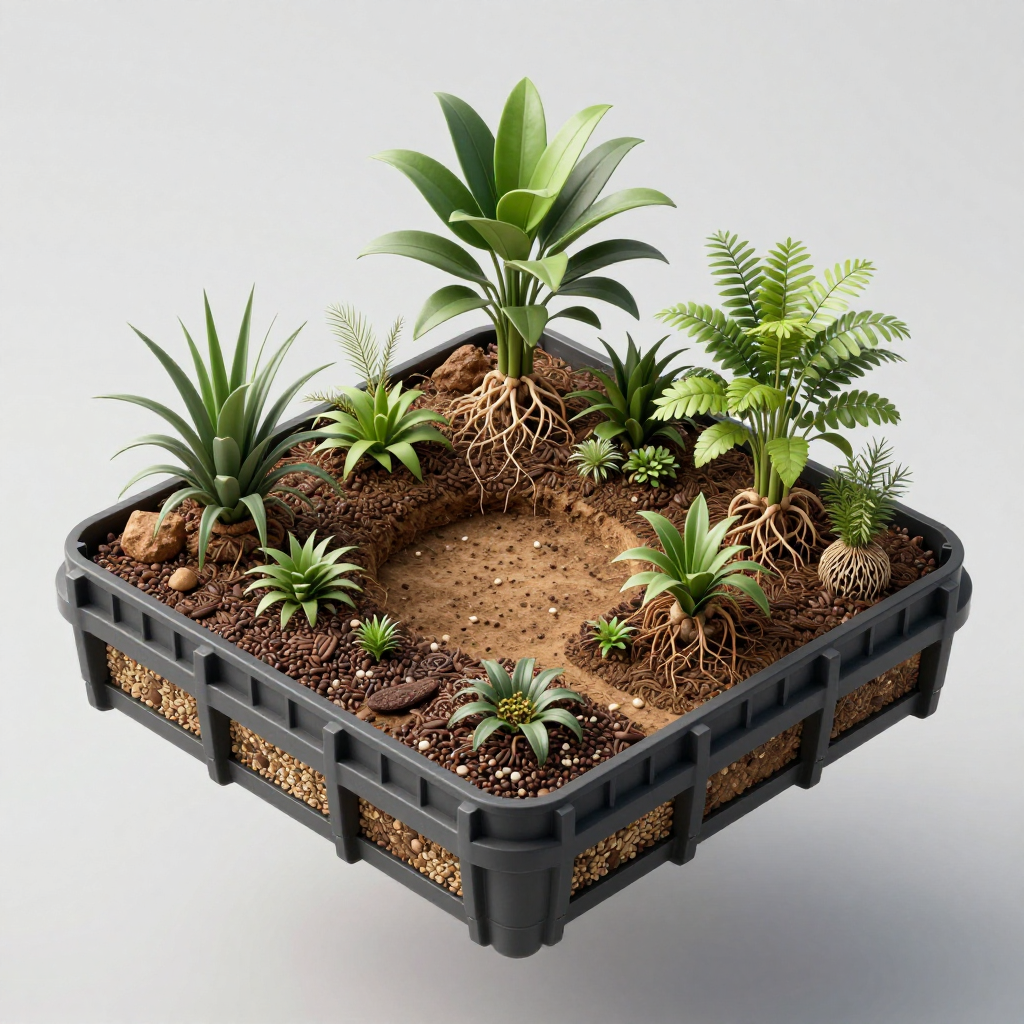
A floating habitat needs planting zones and sheltered structure as well as buoyancy. Native aquatic plants can provide cover and rooting habitat, while the platform’s underside and edges may offer refuge for some organisms when local conditions support them.
Begin with the habitat goal. Is the project intended to provide a small vegetated refuge, create a demonstration site, or support a broader restoration plan? The answer shapes the platform’s depth, planting density, and placement. A floating island should complement natural shorelines and wetlands, not obstruct navigation, water movement, or existing habitat.
Choose **native aquatic plants suited to the local waterbody** and its depth, salinity, temperature, and seasonal changes. Local ecologists, watershed groups, or environmental agencies can help identify appropriate species. Avoid introducing invasive plants, and do not assume that a plant suitable for one region will thrive in another.
Growing media and root barriers must stay in place during rain, waves, and water-level changes. Where possible, design open pathways for water circulation and monitor whether shading from the island affects nearby submerged plants. The structure may offer fish or invertebrates shelter, but the benefit depends on the site and species; it should be measured rather than promised.
Benefits and limits of floating habitats
Floating habitats can reuse selected recovered plastics while adding vegetation and structure to suitable waters. Their ecological and community value depends on thoughtful siting, safe construction, and evidence gathered after installation.
Potential benefits include a visible destination for recovered materials, a platform for native plants, and an opportunity to engage residents in water stewardship. In places with limited shoreline space, a floating structure may add vegetated cover without requiring a planted bank. If the project includes monitoring, it can also help communities learn how plants and aquatic life respond to a new feature.
The limits matter just as much. A floating island removes only the material incorporated into its design, and it cannot stop new waste from entering the water. It may also have little ecological value if plants fail, the platform is poorly placed, or maintenance lapses. Poorly secured materials can become debris themselves.
Water-quality effects are not guaranteed. Plants can take up nutrients as they grow, but the result depends on species, conditions, and whether plant biomass is eventually removed. A floating habitat should not be presented as a stand-alone treatment system or as a replacement for pollution controls, wetland protection, or habitat restoration on land.
Safety, durability, and ongoing care
Floating habitats stay safe and useful when their materials, buoyancy, anchoring, and maintenance plan match local conditions. Regular inspections help catch wear, loose components, and plant problems before they become larger failures.
Select materials for their actual service environment. Recycled plastic used in a frame or float should be durable, fit for the intended application, and protected from avoidable ultraviolet damage. Do not use unidentified recovered containers as sealed flotation without checking whether they can withstand long-term exposure and prevent leaks or fragment release.
Anchoring must hold the island in place without damaging the bed or nearby vegetation. Designers should consider wind, waves, currents, water-level swings, ice where relevant, and access for maintenance. An anchor that works in calm summer conditions may fail during a seasonal storm. Local permits, navigation rules, and environmental requirements may also apply.
Set an inspection schedule based on exposure and risk. A practical checklist can include:
- Check the frame, joints, flotation, and containment for cracks, looseness, leaks, or escaping pieces.
- Inspect anchors and lines for abrasion, slack, corrosion, or movement from the intended position.
- Look for plant stress, invasive growth, pests, and media washing away.
- Remove litter and record repairs, plant changes, and unusual wildlife interactions.
Maintenance takes time and may require safe access, trained staff, and replacement parts. Choosing robust construction reduces some upkeep, but often raises initial cost; choosing a low-cost design can mean more frequent repairs. Plan for the full life of the structure, including eventual removal and responsible disposal or recycling.
How to judge whether a project is working
A floating-habitat project is working when it remains structurally sound, supports healthy target plants, and shows evidence of habitat use or other stated benefits without causing avoidable harm. Measure those outcomes against conditions recorded before installation.
Set a baseline before the island enters the water. Note the site’s water clarity, existing vegetation, water levels, and any visible wildlife use. Then choose a small set of indicators that match the project’s goals. For example, a community demonstration may track volunteer participation and recovered-material records, while a restoration project should also monitor plant survival and habitat conditions.
Useful indicators include:
- Structural condition: Platform position, flotation performance, anchor integrity, and signs of plastic shedding.
- Plant health: Survival, coverage, seasonal growth, and whether native species remain dominant.
- Habitat use: Repeated observations of fish, invertebrates, or birds, recorded using a consistent method.
- Water conditions: Relevant measures such as clarity or nutrients, interpreted alongside weather, season, and other site influences.
- Material and maintenance records: Recovered plastic used, repairs made, parts replaced, and waste generated during upkeep.
One wildlife sighting or a short-term change in water clarity cannot prove that the island caused an improvement. Compare repeated observations over time and, when feasible, with a nearby similar area without a floating structure. If the platform sheds material, harms existing habitat, or fails to meet its purpose, revise or remove it. A project earns the name “sustainable” through its whole life cycle, not simply because it contains recycled plastic.
Frequently asked questions
Can all ocean plastics be used in floating habitats?
No. Only materials that can be identified, cleaned, and shown to be suitable for their intended role should be considered. Contaminated, degraded, or fragmenting plastics should be excluded.
How do floating islands stay in place?
They typically use anchors, lines, or other site-specific restraints. The system must account for currents, wind, waves, water-level changes, and the risk of damaging the lakebed or nearby habitat.
Which plants are suitable for a floating habitat?
Suitable plants are native to the region and adapted to the site’s water depth, salinity, climate, and seasonal conditions. Ask local environmental or watershed specialists before selecting species.
Do floating islands improve water quality?
They may influence local conditions, but results vary by site and design. Plant growth alone does not guarantee cleaner water, and floating islands cannot replace pollution prevention or broader restoration.
What maintenance do floating habitats need?
They need inspections of the frame, flotation, anchors, and containment, along with plant care, litter removal, and repairs when needed. The frequency depends on exposure and construction, so establish a schedule before installation.