Floating Islands Made from Waste: A Climate-Resilient Option for Flood-Prone Communities
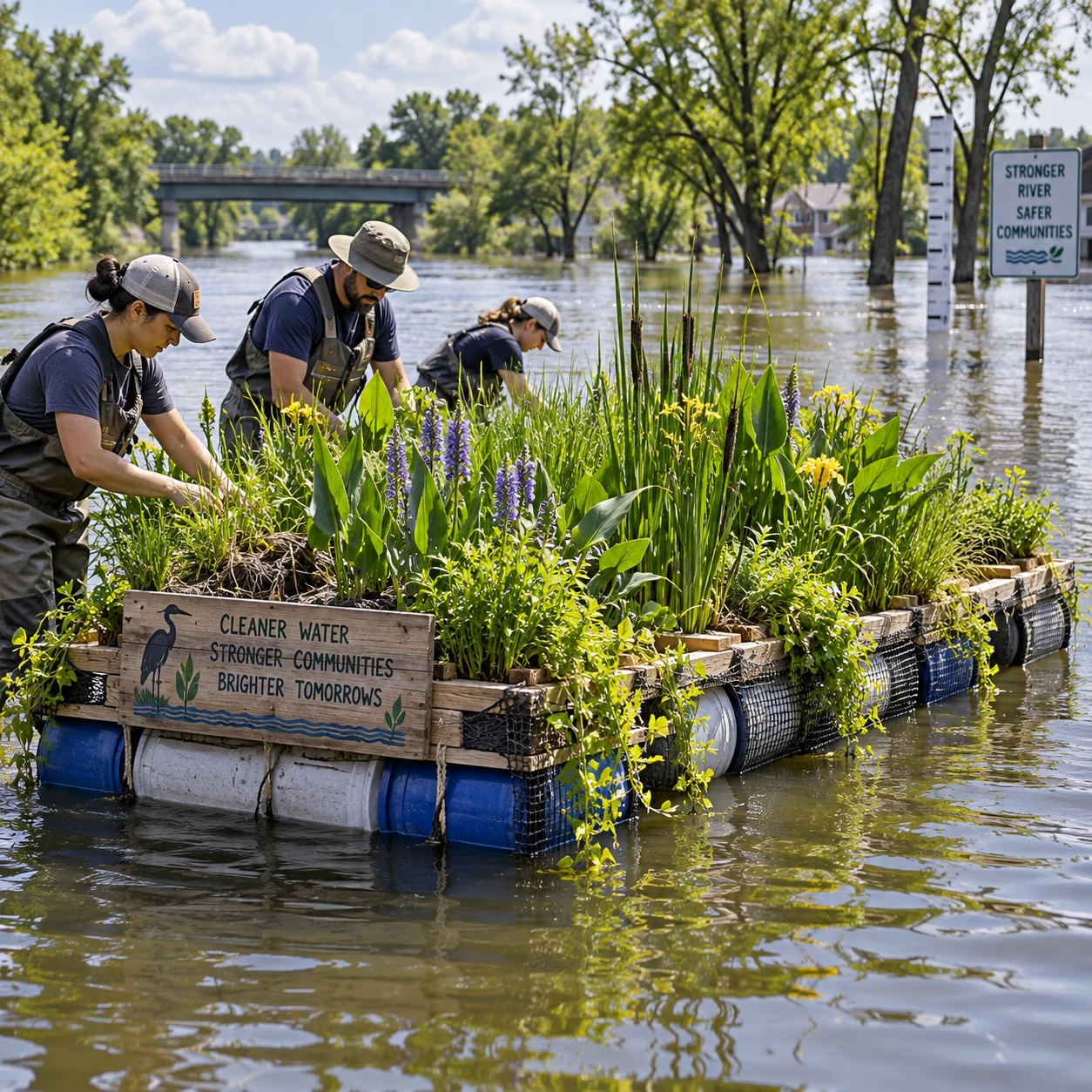
For communities facing repeated floods, rising water levels and damaged shorelines, adaptation often means combining many practical measures rather than relying on one fix. Floating islands made with suitable reclaimed materials can create space for wetland plants and habitat where shorelines are constrained, while adjusting to changing water levels.
These structures have limits. They do not stop floodwaters or replace drainage, levees, floodplain restoration, or evacuation planning. Their value lies in supporting ecological and community resilience as part of a wider, locally designed approach.
Why flood-prone communities need adaptable solutions
Flood-prone communities need adaptable solutions because floods can arrive more often, last longer, or affect places that conventional infrastructure does not fully protect. Local measures that work with changing water levels can complement essential flood planning and infrastructure.
Flood risk varies from one place to another. A river may overtop its banks, a coastal neighborhood may face storm surge, or heavy rain may overwhelm drains. Climate change can intensify some of these hazards, but the risks also depend on land use, local topography, drainage capacity, and the condition of nearby wetlands.
Concrete barriers and drainage upgrades remain important where engineering assessments call for them. Yet they can be costly, require specialist maintenance, and leave ecological or social needs unaddressed. Restoring floodplains and wetlands can store water and support habitat, but land availability may be limited in dense settlements.
Climate resilience means preparing for disruption and recovering from it, not promising that flooding will never happen. Floating islands may fit within that broader effort by adding vegetation and habitat to suitable water bodies, particularly where fixed planting areas are difficult to establish. They are one component of flood adaptation, not a stand-alone defense.
What floating islands are and how they can be built from waste
A floating island is a buoyant platform that supports plants above a water body, often with roots extending into the water below. It can be built with reclaimed materials, but every component must be safe, durable, and suitable for prolonged contact with water.
Many designs use a buoyant frame or core, a growing layer, and plantings suited to local conditions. Reclaimed plastic containers or other buoyant items may provide flotation if they are clean, securely enclosed, and unlikely to break apart. Reused timber can form parts of a frame where it is untreated and appropriate for wet conditions. Natural fiber mats, coir, or other plant-based media may help hold roots and growing material, though they can break down over time.
The phrase “made from waste” should never mean using whatever is available. Avoid materials that may leach chemicals, splinter, corrode, or release small plastic fragments. Painted or treated timber, chemical containers, foam that crumbles, and unknown industrial scrap need careful assessment and may be unsuitable. Reuse can reduce demand for new materials, but it does not automatically make a structure safe or environmentally beneficial.
Designers also need to account for flotation, freeboard, wind, waves, and the added weight of saturated growing media. A small test platform can reveal whether the frame stays level and whether the planting layer holds together before a larger build begins. For broader background on constructed wetlands and water treatment, the U.S. Environmental Protection Agency explains wetland functions and restoration considerations in its wetlands resources.
How floating islands can support climate resilience
Floating islands can support climate resilience by providing habitat, space for aquatic plants, and a flexible planted surface that rises and falls with water levels. They may contribute to healthier local water ecosystems, but they do not prevent floods or guarantee improvements in water quality.
Aquatic plants can offer cover and feeding areas for some insects, fish, and birds. Their roots may provide additional habitat in the water column, while above-water vegetation can add structure to a channel, pond, or sheltered basin. Benefits depend on plant species, water conditions, island size, and the wildlife already present.
Vegetation and root systems can capture some suspended particles and absorb nutrients, which may contribute to water-quality improvement in the right setting. The effect is not a substitute for controlling pollution at its source. If untreated sewage, industrial contaminants, or excessive nutrient runoff enter a water body, a floating island alone cannot resolve the underlying problem. Testing and pollution controls come first.
Because a floating platform moves with the water surface, it may remain planted through moderate changes in water level that would inundate a fixed bed. That flexibility can help maintain habitat in places where shoreline planting is regularly submerged. However, strong currents, waves, debris, and extreme floods can damage or displace an island, so its presence should never be counted as flood protection.
Designing for local conditions and community needs
To design a useful floating island, assess the water body, set clear community goals, choose safe materials and native plants, and plan for anchoring, access, and maintenance. Local participation helps ensure the project fits both ecological conditions and how people use the site.
Start by documenting seasonal water levels, flow speed, wave exposure, water depth, and likely debris loads. Identify whether the proposed location is a pond, canal, river edge, or other water body; each has different constraints. Check local rules and consult water managers or environmental specialists before installing anything in a public waterway.
Choose plant species native to the area and appropriate for the water depth and water quality. Avoid introducing invasive species, and do not collect protected plants from the wild. Native sedges, rushes, or other locally suitable wetland plants may be options, but a local ecologist or nursery can help match species to the site. Plant selection should reflect the project goal: habitat, education, bank-side ecology, or a combination.
Plan the structure around people as well as plants. Confirm that the island will not block boat access, drainage structures, emergency routes, or routine waterway maintenance. Use secure anchoring designed for expected flow and water-level variation, and keep the platform away from swimming areas or drinking-water intakes unless authorities approve the location.
Community-led design works best when responsibilities are clear. Residents can help identify flood history, practical access needs, and valued habitat, while technical partners assess structural and environmental risks. Agree in advance who will inspect anchors, remove litter, replace plants, and report damage. Participation should be voluntary, safe, and supported with the tools and training required.
Limitations, maintenance, and responsible implementation
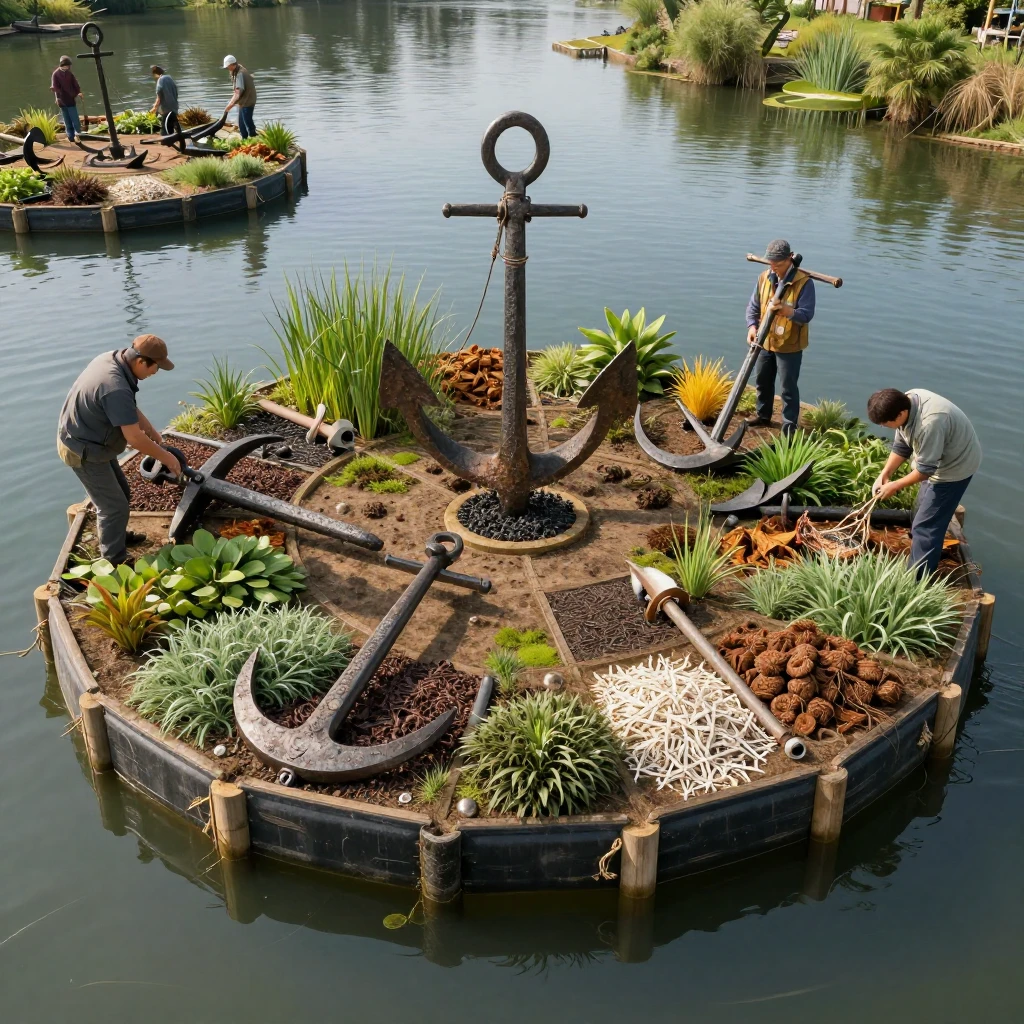
Floating islands need regular inspection and may not be suitable for fast, debris-filled, polluted, or heavily trafficked waterways. Responsible implementation begins with a site assessment and includes a realistic plan for repairs, monitoring, and eventual removal.
Durability is a central trade-off: inexpensive reclaimed materials may lower initial costs, but they can require more frequent repairs. Waterlogged media adds weight, exposed materials can degrade under sunlight, and storms may loosen connections. Build only with materials whose condition and likely lifespan are understood, and design the platform so damaged parts can be replaced without discarding the entire structure.
Common problems include:
- Using unverified waste: A material may appear sturdy but contain contaminants or break into fragments. Check its source, condition, and suitability for aquatic use before construction.
- Anchoring too lightly: Calm-weather testing can give a false sense of security. Have a competent person assess likely water levels, currents, wind, and debris before choosing an anchoring system.
- Planting without a maintenance plan: Unmanaged vegetation can die back, spread beyond the platform, or collect litter. Schedule inspections and set a process for managing unwanted growth.
Water quality matters both before and after installation. Test for relevant concerns, follow local environmental guidance, and do not position an island where it could hide a pollution source or obstruct water monitoring. After high water, inspect for loose components, trapped debris, plant loss, and damage to nearby habitat. Keep a record of findings so the community can adjust the design or remove the platform if risks outweigh benefits.
Getting started with a community floating-island project
To start a community floating-island project, define its purpose, check site suitability, confirm permissions, build a small pilot, and monitor results before expanding. A staged process reduces avoidable risks and shows whether the island meets local needs.
- Set a specific goal. Decide whether the project aims to create habitat, demonstrate wetland ecology, support shoreline planting, or improve a managed pond. Avoid claiming flood prevention as an outcome.
- Choose and assess a site. Map seasonal water levels, flow, access, water quality, wildlife, and existing infrastructure. Ask the relevant landowner or water authority about permits and restrictions.
- Review materials and design. Record where reclaimed materials came from and check for contamination, durability, and safe handling. Work with people experienced in waterway management or ecological restoration to review buoyancy and anchoring.
- Build a modest pilot. Start with a platform that can be inspected and recovered safely. Test it through ordinary seasonal conditions before considering a larger installation.
- Monitor and adapt. Track water levels, plant survival, wildlife observations, litter, structural wear, and maintenance hours. Use those records to decide whether to repair, redesign, expand, or remove the island.
Compare the pilot with other nature-based measures, including wetland restoration, rain gardens, floodplain reconnection, and vegetated buffer strips. Each works in a different setting and serves different functions. Floating islands are most promising where open water is available and shoreline planting space is scarce; floodplain restoration may offer broader storage benefits where land and hydrology permit.
Can floating islands prevent flooding?
No. Floating islands do not stop floodwater or replace flood defenses, drainage upgrades, evacuation plans, or wetland and floodplain restoration. They can support habitat and adapt to some changes in water level, but extreme flows may damage them.
What waste materials can be used to build a floating island?
Some clean, durable reclaimed materials may be suitable for frames or flotation if they are securely contained and safe for aquatic use. Test materials for contamination and degradation; avoid unknown chemicals, treated timber, and materials that crumble or shed fragments.
What maintenance do floating islands need?
Inspect the platform, connections, anchors, plants, and surrounding water regularly, with additional checks after storms or high water. Remove trapped litter, repair damage, manage unwanted plant growth, and keep records of maintenance and performance.
Are floating islands suitable for every waterway?
No. Fast currents, heavy debris, strong waves, poor water quality, navigation needs, or sensitive wildlife may make a site unsuitable. A local assessment and required permissions should come before construction.