Designing Self-Sustaining Floating Islands from Waste: Renewable Energy and Water Management
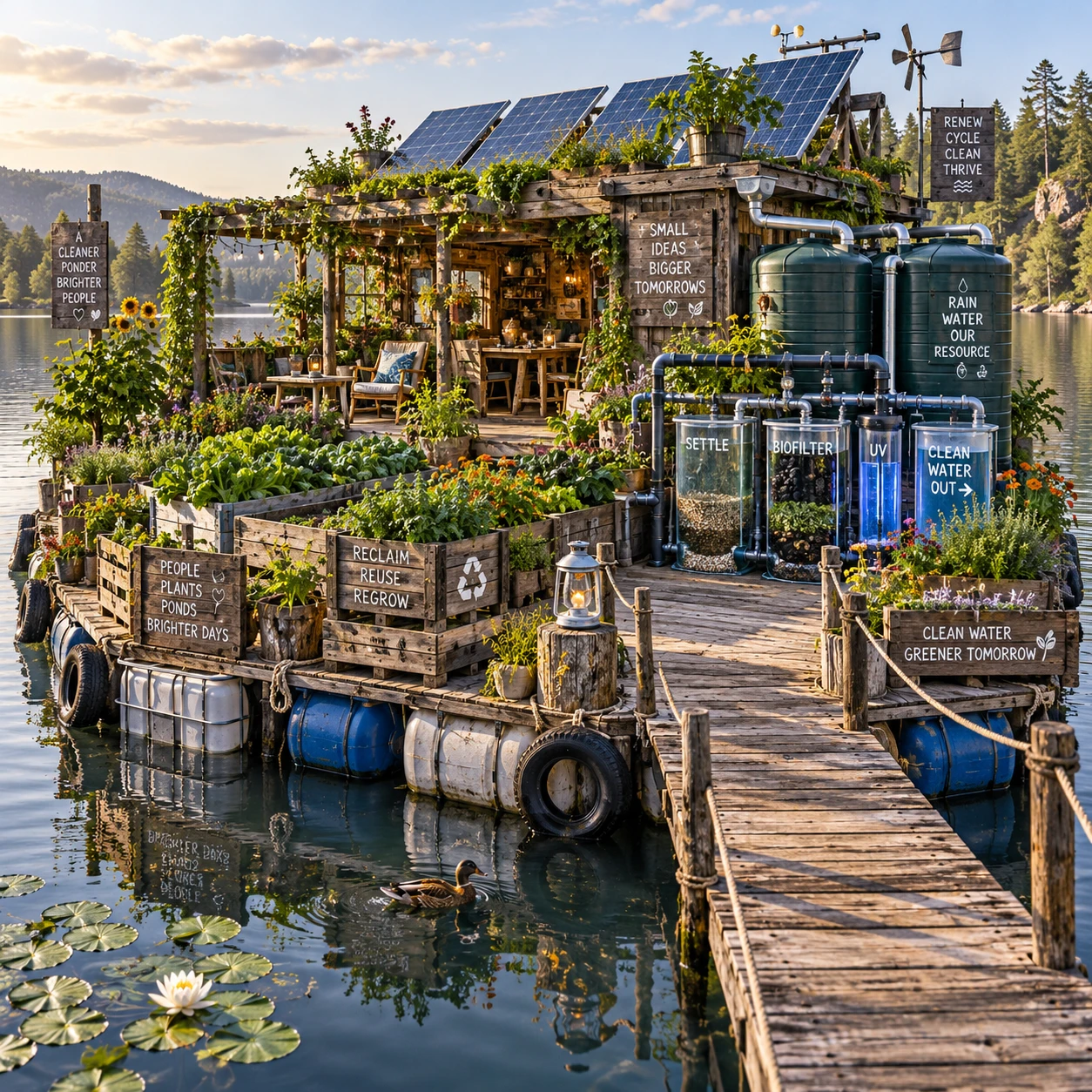
A floating island made from waste can do more than stay afloat. With sound structural design, renewable power, and a planned water cycle, it can support planting, habitat, or light human use while reducing reliance on shore-based services. Self-sufficiency, however, depends on the site and the loads: solar output varies, treatment needs upkeep, and reclaimed materials are not automatically safe.
The most reliable approach is to design the structure, energy supply, and water systems as one connected project. Each choice affects weight, stability, access, and maintenance.
Start with the island’s purpose, site, and waste-based structure
Start by defining what the floating island must support and what conditions it will face. Its intended use, local water levels, wind, waves, and access determine the structure, buoyancy, and materials needed for a stable design.
A habitat island with aquatic plants has different requirements from a platform carrying people, equipment, or a water tank. List the expected loads, including the platform, saturated growing media, plants, solar panels, batteries, stored water, and occasional maintenance workers. Water storage can be especially heavy: one litre weighs about one kilogram, so tank capacity must be included from the start.
Waste-derived floating modules might use reclaimed plastic drums, sealed containers, or other recovered components, but only when their history and condition are known. Avoid containers that held hazardous chemicals, materials that leach contaminants, and plastics that become brittle in sunlight. Reuse should not introduce pollution into the water.
Calculate buoyancy with a safety margin rather than designing to the point of maximum displacement. Arrange flotation evenly, use a frame that distributes loads, and consider how the island responds if one module leaks. Mooring must also accommodate changing water levels without pulling the platform out of shape. On exposed or regulated sites, an engineer or local environmental authority may need to review the design.
Match renewable energy to real operating needs
Match renewable energy to the island’s measured electrical demand and available space. Solar photovoltaic panels are often the simplest option, but panel area, shading, seasonal sunlight, storage, and equipment efficiency determine whether they can meet the load.
Begin with a load list: record each device’s power rating and how many hours it runs per day. A small monitoring unit uses little energy compared with a pump that runs frequently. Choose efficient pumps and schedule them only when needed; reducing demand is often cheaper and lighter than adding panels and batteries.
Solar panels can sit on a raised rack or canopy, leaving room below for planting and maintenance. The rack must withstand wind and avoid concentrating weight on a small part of the platform. Panel orientation and tilt depend on the location, while shade from vegetation or nearby structures can reduce output.
Energy storage helps run equipment when sunlight is low, but batteries add weight, cost, and safety requirements. Place them in a protected, ventilated enclosure suitable for the battery type, and keep connections away from splash and standing water. Size storage around essential loads and the period of autonomy required, not an assumption that the island must operate indefinitely without sun. Wind or other renewable systems may be considered only where site conditions, permitting, and maintenance make them practical.
Design a practical water cycle
A practical water cycle collects rain, stores it safely, treats it for its intended use, and reuses suitable flows. Keep potable and non-potable water separate, and treat water whenever its use or discharge requires it.
Rainwater harvesting can start with a clean panel or canopy surface, gutters, a first-flush diverter, and a covered tank. Screens help keep leaves and insects out; a first flush sends the dirtiest initial runoff away from storage. Tank capacity should reflect rainfall patterns, catchment area, demand, and dry periods. A large tank may improve reliability, but its full weight can affect buoyancy and stability.
Water for irrigation or cleaning may need basic filtration, while drinking water requires treatment appropriate to local health guidance and regular testing. Clear-looking water is not necessarily safe. Use a defined treatment train, such as sediment filtration followed by disinfection where appropriate, and protect stored water from contamination.
Greywater reuse can reduce demand for fresh water, but greywater from sinks or showers still contains residues and microorganisms. Keep it separate from sewage, use suitable treatment, and reuse it only for approved non-potable purposes. Do not discharge untreated water into the surrounding habitat.
Aquatic plants and constructed wetlands can help manage some nutrient-rich water when designed for the site, flow, and plant species. They are not a substitute for treatment where public health or water-quality standards apply. Guidance from the U.S. Environmental Protection Agency on green infrastructure design can help frame runoff management, but local requirements still govern a specific installation.
Integrate energy and water systems in the layout
Integrate panels, batteries, pumps, filters, tanks, and planting areas so that each system remains accessible and the island stays balanced. A compact layout can shorten pipe runs and reduce energy use, but crowding equipment can block inspection and repairs.
Place heavy components, such as tanks and batteries, low and near the platform’s centre where possible. Distribute flotation beneath those loads, and leave clear paths to valves, filters, electrical disconnects, and moorings. Keep electrical equipment protected from water and provide safe isolation before maintenance.
Put the water intake or collection point where it is least likely to draw in sediment, plant debris, or contaminants. Position pumps close to their source to limit unnecessary head and pipe losses. Filters need room to be opened or replaced, and tanks need access for cleaning. Where a wetland treatment area is included, keep flow paths defined so water does not bypass the planted zone.
Use simple controls that operators can understand. A float switch can prevent a pump from running dry, while a basic monitor can track tank level, battery state, and pump runtime. Design for access, not just appearance: a system that cannot be inspected safely is likely to fail unnoticed.
Plan for maintenance, safety, and environmental impact
Plan routine inspections and safe operating procedures before installation. Floating islands face wear from sunlight, waves, changing loads, plant growth, and water exposure, so maintenance is part of the design rather than an occasional extra.
Inspect flotation, fasteners, frame connections, mooring lines, and reclaimed materials for cracks, leaks, corrosion, or movement. Check solar wiring and battery enclosures according to manufacturer instructions. Clean screens and filters, remove sediment as needed, and test treated water based on its intended use. Record findings so gradual changes, such as a module taking on water, do not go unnoticed.
Choose materials with documented previous uses where possible. Some recovered plastics may shed fragments or contain additives unsuitable for aquatic settings; coatings and treated wood can also leach substances. Secure loose components so storms or wake cannot carry them away. Avoid invasive plants, and monitor for nutrient release or unintended changes to local habitat.
Safety includes load limits, non-slip access, handholds where people board, and a plan for storms or high water. A design for a sheltered pond may not be suitable for a river, tidal area, or public site. Local permits and water-quality rules may apply to moorings, rainwater use, greywater reuse, and habitat alterations.
Use a phased approach to test and improve the design
Build and test a floating island in phases, beginning with a stable structure and essential systems. Monitoring a smaller installation first reveals real energy and water demand before you commit to additional panels, batteries, tanks, or treatment equipment.
First, test the waste-derived modules and frame without equipment. Check buoyancy, balance, and mooring under expected conditions. Next, add the essential renewable-energy system and measure actual power use, including pump startup and daily runtime. Then install water collection and treatment components, verifying that flows, storage, and maintenance access work as planned.
Keep a simple log of water levels, rainfall, battery performance, pump operation, filter changes, and observed leaks or material wear. Compare operating data with the original assumptions. If energy use exceeds supply, reduce run time or improve pump efficiency before adding storage. If the island sits unevenly, redistribute loads or revise flotation rather than compensating with an arbitrary extra module.
A phased design turns the island into a learning system. Expand only when the existing structure remains stable, water quality is appropriate for its intended use, and maintenance is manageable. The goal is dependable performance for a defined site and purpose, not a promise of complete independence under every condition.
Frequently asked questions
What waste materials are suitable for floating island modules?
Use recovered materials only when they are structurally sound, traceable, and suitable for long-term water exposure. Sealed reclaimed plastic containers may be candidates, but check for chemical history, UV damage, leaks, and potential leaching. Reuse does not remove the need for testing and containment.
Can a floating island run entirely on solar power?
It can run on solar power if its loads, panel area, sunlight, and storage are well matched. Pumps and other equipment may need to run less often during cloudy periods. Measure demand and design for realistic low-sun conditions before claiming full energy independence.
How can rainwater be collected and reused safely?
Collect runoff from a clean surface, screen debris, divert the initial flush, store water in a covered tank, and treat it for the intended use. Keep drinking water separate from irrigation and greywater systems, and test it where health or local rules require.
How often do floating island systems need maintenance?
There is no single schedule for every site. Inspect the structure and mooring regularly, especially after storms or unusual water-level changes; check filters, pumps, batteries, and water quality at intervals suited to the equipment and use. Follow manufacturer guidance and keep a maintenance log.